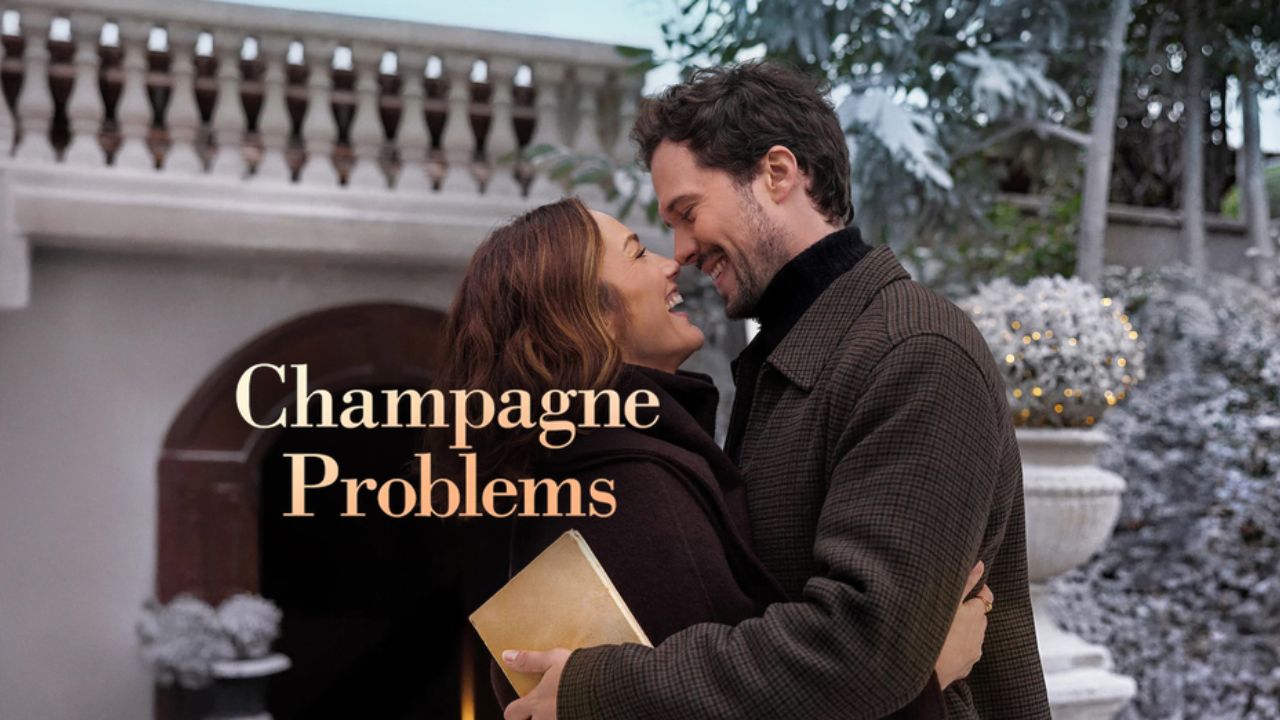
Romantic drama films often rely on familiar tropes—breakups, misunderstandings, grand gestures, and emotional recoveries. But Champagne Problems rises above formulaic storytelling to deliver something more intimate, more vulnerable, and more genuinely human. Exploring themes of anxiety, emotional baggage, and the inability to love freely, the film captures the quiet tragedies that happen behind closed doors and the heartbreak that comes with loving someone who is not yet ready for love.
At its core, Champagne Problems is a story about letting go, healing slowly, and learning that some relationships fail not because they lack love, but because timing, trauma, and fear can become stronger than emotion. This review breaks down the film’s narrative depth, performances, direction, symbolism, and the emotional punch that has made it a modern romantic-drama favourite.
Plot Summary: A Love Story Torn Between Hope and Fear
The movie follows Emily Carter, a talented but emotionally fragile young woman who has spent most of her life battling anxiety and unresolved childhood trauma. On New Year’s Eve, her long-time boyfriend Michael Avery plans to propose, believing they’re ready for the next chapter.

However, the night turns into a heart breaking unraveling.
When Michael gets down on one knee during a quiet moment away from the party, Emily panics. Her mind spirals into self-doubt, fear, and the overwhelming feeling that she is “not enough.” Instead of celebrating, she refuses the proposal, spiralling into tears and leaving Michael devastated.
What follows is a reflective journey told through past memories, emotional revelations, and two parallel timelines: one where Emily explains her internal battles, and another where Michael tries to understand what went wrong.
As the story progresses, both characters confront the painful truth:
Love cannot survive when one heart is ready and the other is broken.
View Also: Ice Fall Movie 2025
Emily Carter: A Portrait of Silent Struggle
Emily is beautifully written as a complex, deeply human character. Unlike typical romantic heroines, she is not confused, selfish, or indecisive—she is simply wounded.
Her battles include:
- Fear of abandonment
- Childhood emotional trauma
- Unprocessed grief
- Low self-worth
- Intense social anxiety during major life decisions
The movie does not romanticize her pain. Instead, it presents it with raw honesty, showing how mental health issues can sabotage even the strongest, most genuine relationships.
Her refusal of the engagement is not a rejection of love—it is a moment of emotional collapse.
The film makes a powerful statement:
Some Champagne Problems are not “problems” at all; they are symptoms of wounds no one can see.
Michael Avery: The Heartbroken Dreamer
On the other side of the emotional divide is Michael—a caring, patient, and optimistic partner who truly believes he can help Emily heal. His proposal comes from a place of love, but also from the belief that marriage might finally erase her fears.
When Emily says no, Michael is shattered.
The film follows his emotional journey through:
- Anger
- Confusion
- Helplessness
- Blame
- Acceptance
Michael’s character represents the painful truth many lovers face:
Sometimes you can give everything to someone and still not be able to save them.
His transformation from a hopeful partner to a man forced to confront emotional boundaries is beautifully done.
Themes That Make the Film Deep and Impactful
1. Mental Health and Relationships
The film does not shy away from showing how anxiety and trauma quietly influence major decisions. Emily’s panic is not dramatic—it is realistic, grounded, and heartbreaking.
2. Timing vs. Love
Champagne Problems highlights that even the strongest love can fail when two people are emotionally out of sync.
3. The Burden of Expectations
Michael’s well-intentioned expectations unknowingly pressure Emily into a mental breakdown.
4. Healing Is Personal
The film’s message is clear: healing cannot be rushed or forced by a relationship.
5. Love Without Blame
Neither character is portrayed as the villain. Instead, the story shows how good people can still break each other unintentionally.
Direction and Cinematography
The cinematography is intimate and emotional, relying on:
- Close-up shots that capture trembling hands, watery eyes, and nervous breathing
- Warm lighting that contrasts with the cold emotional distance
- Flashback sequences shot with soft, nostalgic tones
- Slow, lingering camera movements during emotional dialogues
The directing style emphasizes emotional vulnerability rather than dramatic spectacle. It is a film that prioritizes feeling over action.
Symbolism: Why “Champagne Problems” Matters
The title is a metaphor used multiple times in the film.
Champagne represents:
- Celebration
- Milestones
- Engagements
- “Perfect” relationships
- Social expectations
Problems represent:
- Internal battles
- Hidden pain
- Emotional paralysis
- Fear of commitment
- Depth behind the smiles
The movie’s central message:
To the world, it may look like a minor problem, but to the person suffering, it is overwhelming.
This makes the story relatable for anyone who has ever struggled with self-worth or emotional readiness.
Supporting Characters and Impactful Side Arcs
Secondary characters make the story richer:
- Ava, Emily’s therapist, offers professional insights without being preachy.
- Jonah, Michael’s friend, delivers emotional grounding and male vulnerability.
- Emily’s mother appears in flashbacks, showing how childhood trauma formed Emily’s fears.
Each character adds complexity to the central conflict, making the unfolding drama more layered.
Pacing and Structure
The film uses a nonlinear storytelling approach:
- Present-day heartbreak
- Past romantic memories
- Therapy sessions
- Personal monologues
- Michael’s perspective
- Emily’s perspective
The pacing is slow and reflective rather than rushed or overly dramatic. It is designed to let viewers sit with the emotions, mirroring the characters’ own internal processing.
View Also: The Running Man Movie 2025
Final Act: Acceptance Instead of Reunion
Unlike typical romance dramas, Champagne Problems does not force a reunion or an unrealistic happy ending. Instead, the finale focuses on emotional acceptance.
Emily begins therapy seriously, learning that her healing is her own responsibility. Michael moves on, realizing that loving someone sometimes means letting them go.
Their final scene together is quiet, gentle, and heart breaking—full of mutual respect but clear understanding that they must walk separate paths.
It is refreshing, mature, and emotionally authentic.
Official Trailer
Why the Film Works So Well
Champagne Problems succeeds because it is:
- emotionally honest
- psychologically realistic
- beautifully acted
- meaningful
- relatable
- thematically mature
It is not just a movie about a breakup.
It is a movie about why people break.
Conclusion: A Heart breaking, Beautifully Human Film
In a world full of predictable love stories, Champagne Problems dares to explore the kind of relationship that doesn’t get celebrated—the ones that end not because of betrayal or lack of love, but because one heart is ready while the other is still healing.
For anyone who has ever walked away from someone they loved because they weren’t emotionally whole, this movie will feel painfully real.
It is a romantic drama that lingers long after the credits roll.
3 thoughts on “Champagne Problems Movie 2025”