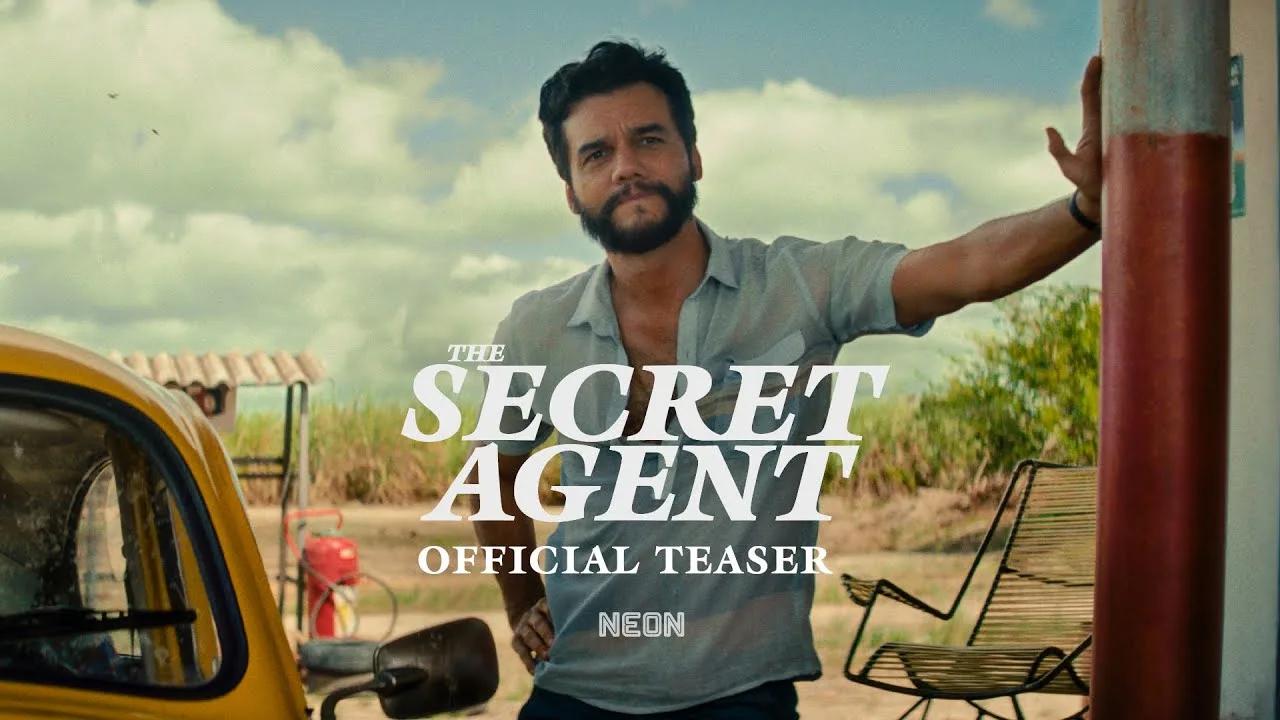
The Secret Agent Movie: In The Secret Agent, acclaimed Brazilian filmmaker Kleber Mendonça Filho returns with a narrative that blends suspense, political undertones, and emotional tension with his signature atmospheric style. With Robson Andrade, Rubens Santos, and Licínio Januário leading the cast, the film invites viewers into a world of deception, paranoia, and moral ambiguity. This review explores the film’s layered storytelling, intriguing performances, thematic depth, and cinematic significance.
A Cinematic Experience Rooted in Atmosphere and Human Behaviour
Kleber Mendonça Filho is known for creating films that live beyond their plots—and The Secret Agent is no exception. Instead of relying solely on traditional spy-thriller tropes, the film uses the concept of espionage as a backdrop to explore the fragility of identity, the weaponisation of truth, and the psychological weight of secrecy.
Rather than presenting a typical action-driven spy movie, Mendonça Filho takes a grounded, realistic approach. What emerges is a slow-burning yet absorbing examination of how secrecy corrodes trust, reshapes personal relationships, and pushes individuals into emotional and moral crisis.
View Also: Eternity Movie 2025 Review
A Story That Thrives on Subtext More Than Action
The central premise revolves around an ordinary man who becomes entangled in a covert operation. But what makes the story fascinating is the way it unfolds—not through loud shootouts or high-tech gadgets, but through silent observations, tense conversations, and carefully timed reveals.
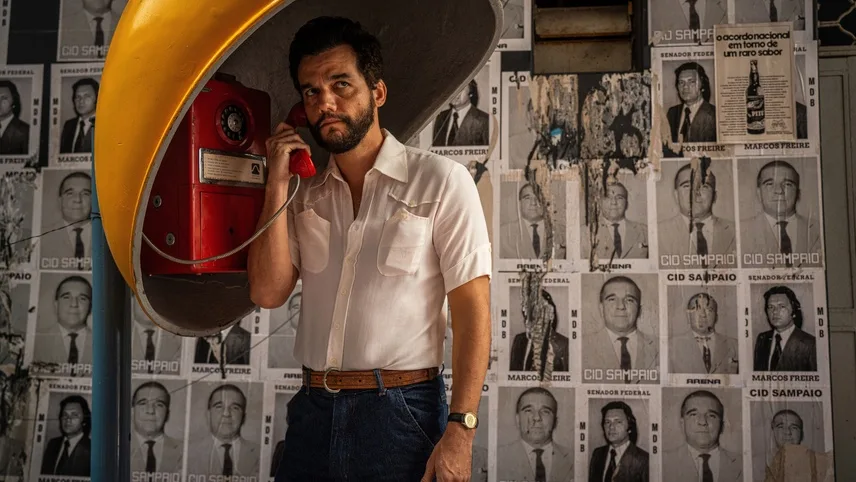
Instead of a straightforward hero-and-villain dynamic, the film blurs the lines between good and evil. Every character carries shades of grey, and every conversation hides a deeper agenda. The script encourages viewers to pay close attention, rewarding them with subtle clues and layered meaning.
Mendonça Filho uses the spy narrative only as a shell. The real story lies in:
- How information is controlled and manipulated
- How simple people become pawns in larger power structures
- How political tension silently infiltrates everyday life
- How secrecy transforms ordinary morality
The result is a film that lingers long after the credits roll.
Robson Andrade Delivers a Powerfully Restraint Performance
At the centre of The Secret Agent is Robson Andrade, who plays the unnamed protagonist—a man living quietly until circumstances force him into the world of espionage. Andrade’s performance is marked by restraint, internal conflict, and controlled emotion. He doesn’t rely on dramatic outbursts; instead, he communicates fear, suspicion, and guilt through micro-expressions and body language.
His character goes through a psychological unraveling. What begins as curiosity evolves into tension and paranoia. Andrade wonderfully captures the instability of a man caught between self-preservation and moral responsibility. His performance becomes the emotional anchor of the film, pulling the audience deeper into the story’s slow-building tension.
Rubens Santos: A Calm Yet Menacing Presence
Rubens Santos plays a role that is pivotal yet quietly sinister. His character appears helpful at first, but Mendonça Filho gives him just enough ambiguity to keep viewers guessing about his true loyalties.
Santos excels in portraying characters who hold power without raising their voices. His calm demeanour masks an unspoken threat—an impression that he always knows more than he reveals. In a genre often dominated by loud, intimidating villains, Santos delivers menace through soft-spoken authority and psychological manipulation.
His scenes with Robson Andrade intensify the film’s suspense, functioning like a mental chess match where every move counts.
Licínio Januário Brings Emotional Complexity
Licínio Januário’s performance adds balance to the cast. While Andrade and Santos drive the film’s tension, Januário brings the emotional counterweight. His character struggles with loyalty, trust, and personal stakes that complicate the unfolding espionage plot.
Januário avoids melodrama, opting instead for subtle expressions of pain, disappointment, and vulnerability. His character becomes a reminder that behind every spy narrative is a web of ordinary lives affected by extraordinary circumstances.
He contributes significantly to the film’s humanity and ensures the emotional stakes remain grounded.
Kleber Mendonça Filho’s Direction: Subtle, Smart, and Unapologetically Political
Mendonça Filho has always infused his films with social awareness and political commentary. The Secret Agent is no different. He avoids overt speeches or exaggerated dramatics—choosing instead to embed political tension within the setting, conversations, and behaviour of characters.
Key Directorial Strengths:
1. Atmosphere Over Spectacle
The film’s most gripping moments come not from action sequences but from silence—pauses, glances, and unspoken worries. Mendonça Filho knows how to build tension through pacing and visual cues.
2. Realistic Spy Work
Unlike Hollywood spy movies, The Secret Agent portrays espionage as slow, lonely, and emotionally draining. This realism makes the narrative more relatable and psychologically engaging.
3. Social Commentary
Behind the cloak-and-dagger plot lies a commentary on:
- institutional surveillance
- political manipulation
- erosion of trust within communities
- economic exploitation
- the fragility of democratic spaces
These themes are woven seamlessly into the character arcs and environment.
4. Bold Nonlinear Narrative Choices
Mendonça Filho isn’t afraid to experiment. The film occasionally shifts perspectives or jumps in time, forcing the audience to actively piece together the mystery.
Cinematography and Sound: Enhancing the Psychological Tension
The visual and auditory elements greatly contribute to the film’s unique identity.
Cinematography
The use of tight framing and dimly lit interior shots amplifies the feeling of claustrophobia and constant surveillance. Outdoor scenes, though rare, contrast sharply with the protagonist’s confinement, hinting at the freedom he has gradually lost.
Wide shots are sparsely used, so when they appear, they emphasize vulnerability and isolation. The camera often lingers on characters for extended moments, forcing viewers to interpret their emotional states.
Sound Design
Silence plays a critical role. Ambient sounds—like footsteps, distant chatter, or background hum—often carry more weight than music. When the score does appear, it’s subtle and atmospheric, building tension without announcing itself.
The audio landscape mirrors the protagonist’s mental journey. As paranoia grows, everyday sounds feel increasingly threatening.
View Also: Blue Eyed Girl Movie Review 2025
A Narrative That Rewards Patience
The Secret Agent is not a fast-paced thriller. It unfolds gradually, immersing its audience in quiet dread. This slow pace may not appeal to those expecting conventional spy entertainment, but for viewers who appreciate psychological suspense, the film offers rich rewards.
Themes That Stand Out
- The loneliness of secrecy
The protagonist isolates himself emotionally and physically as he becomes entangled in espionage. - Truth as a weapon
Information is used strategically by characters, shaping the political and emotional landscape. - Moral sacrifice
No one emerges unscathed; every decision has consequences. - Societal vulnerability
The film subtly highlights how institutions exploit ordinary people when power goes unchecked.
A Deeply Human Spy Thriller
What sets The Secret Agent apart from mainstream thrillers is its commitment to human emotion. Instead of a spectacle-driven narrative, the film stays close to its characters—examining their fears, regrets, hopes, and the lengths they go to survive.
This focus on humanity makes the film resonate. Even when the political elements become intense, the emotional core remains the central force.
Conclusion: A Mature, Intelligent, and Haunting Thriller
The Secret Agent is a bold and atmospheric entry into the spy genre. It doesn’t care about superficial excitement—it is more concerned with psychological depth, moral ambiguity, and political realism.
Highlights include:
- Robson Andrade’s controlled and powerful lead performance
- Rubens Santos’ quietly intimidating presence
- Licínio Januário’s emotional nuance
- Kleber Mendonça Filho’s brilliant atmospheric direction
- Rich cinematography and sound design
- A narrative that blends politics with personal struggle
This is a film for viewers who appreciate slow-burn thrillers, character-driven narratives, and intelligent commentary wrapped in suspense.
The Secret Agent may not cater to fans of adrenaline-filled espionage films, but it stands out as a thoughtful and quietly intense thriller—one that continues to echo in your mind long after the screen fades to black.