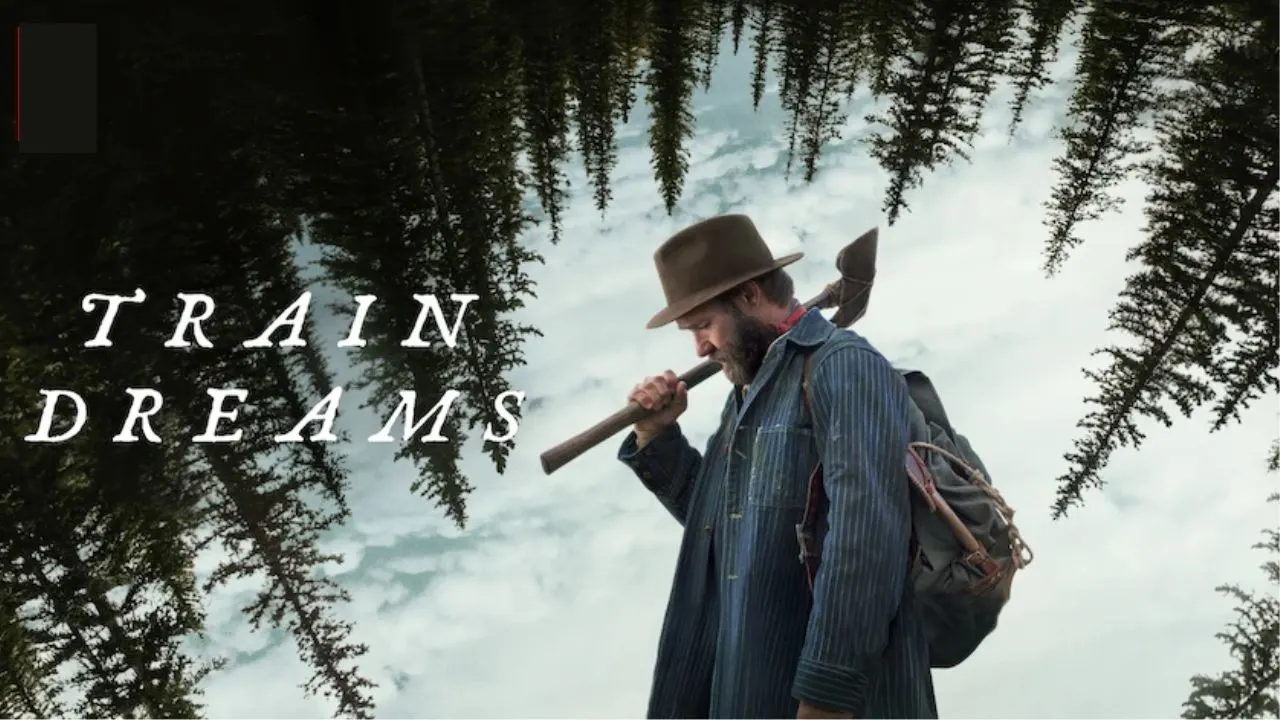
In this evocative adaptation, a frontier worker’s quiet life transforms into a haunting meditation on grief, myth, and survival, drawing audiences into a landscape where emotion and wilderness intertwine.
The cinematic version of Train Dreams takes Denis Johnson’s renowned novella and reimagines it with remarkable artistry. The film embraces the book’s introspective spirit while expanding its visual and emotional scope. Through richly textured storytelling and atmospheric imagery, it explores themes of solitude, transformation, and the shifting tapestry of early-20th-century America. What emerges is a poignant, emotionally layered film that immerses viewers in both the interior life of its protagonist and the sweeping frontier world around him.
A Stunning Reinterpretation of the American Frontier
From the outset, the Train Dreams movie establishes a profound sense of place. Towering forests, winding rivers, and wild mountain ranges dominate the visual landscape, reminding viewers of the harsh, unyielding conditions that defined frontier life. The film treats the natural world not just as scenery, but as a powerful narrative force.
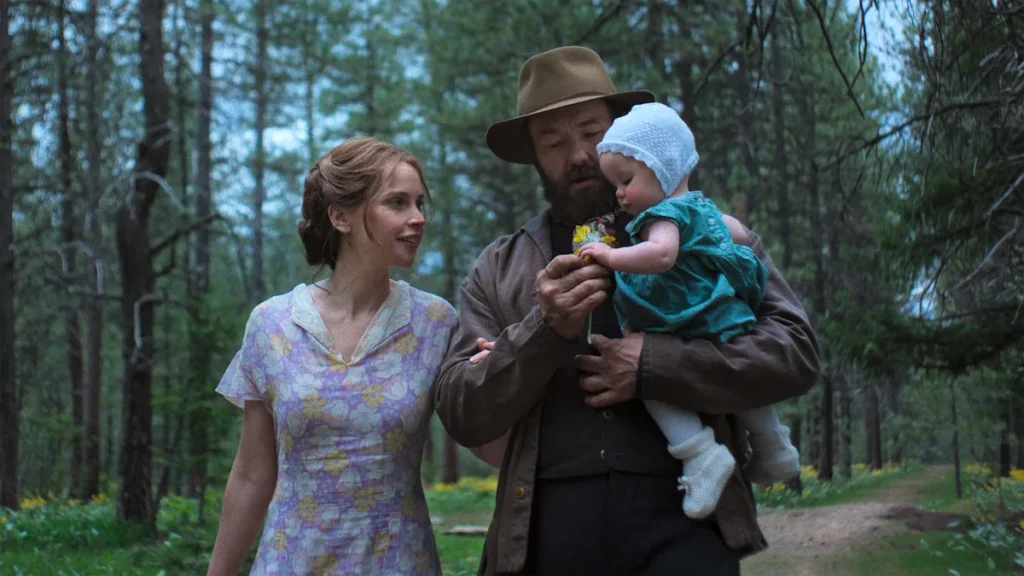
The portrayal of early American logging camps is especially vivid. It strips away romanticized notions of frontier glory and replaces them with grit, danger, and the demanding labour that shaped a rugged working class. Chainsaws, falling timber, and perilous climbs fill the screen, grounding the film in authentic details of a vanishing era.
Robert Grainier, the story’s quiet, unassuming protagonist, stands at the centre of this changing world. His life becomes a reflection of a nation at a crossroads—caught between the steady rhythms of traditional labour and the disruptive progression of technology. The expanding railroad network is depicted as both opportunity and threat, representing the irreversible transformation of the American landscape.
The train itself becomes a recurring symbol, echoing through the film as a reminder of modernization’s relentless advance. Its arrival signals new possibilities but also foreshadows the instability and loss that Grainier must inevitably confront.
View Also: The Family Plan 2 Movie Review 2025
An Emotional Narrative Shaped by Grief and Human Endurance
At its emotional core, Train Dreams is a meditation on grief—how it takes shape, how it lingers, and how it reshapes identity. Grainier’s quiet life is derailed by a devastating personal tragedy, portrayed with restraint and emotional authenticity. The film does not rely on melodrama; instead, it allows pain to surface in stillness, silence, and small gestures.
Moments depicting Grainier returning to the charred remains of his home are especially moving. The camera lingers on blackened timbers, scorched earth, and the hollow quiet left by loss. The film’s most powerful emotional beats emerge from what is not said, allowing viewers to feel the heaviness of his grief through visual storytelling alone.
As he tries to rebuild his life, Grainier retreats into the wilderness, which becomes both a refuge and an adversary. Scenes of him wandering through forests, working with his hands, and observing wildlife add a contemplative rhythm to the film. These moments emphasize his bond with nature—a bond strengthened, complicated, and sometimes threatened by the grief he carries.
Yet even through hardship, the film celebrates resilience. It portrays survival not as victory, but as persistence—small acts of endurance that keep Grainier moving forward.
A Mesmerizing Blend of Reality and Myth
One of the movie’s greatest achievements is its seamless integration of realism and myth. Like the novella, the film hovers between the tangible and the mystical, reflecting the uncertainty and superstition of frontier life. Dreams flicker across the screen with evocative imagery, blending memory and imagination.
The recurring appearance of a lone wolf becomes a central visual motif. At times ominous, at times comforting, the wolf mirrors Grainier’s emotional journey. Whether symbolic, supernatural, or simply a creature of the wilderness, its presence deepens the film’s sense of mystery and emotional complexity.
These mythic undertones enrich the narrative rather than distract from it. They serve as a reminder that, in isolated communities shaped by harsh landscapes and limited human contact, folklore often carries as much weight as fact.
Performances Defined by Subtlety and Authenticity
The film’s emotional power relies heavily on the strength of its performances. The actor portraying Robert Grainier delivers a stunningly nuanced portrayal. Rather than relying on dramatic monologues or expressive dialogue, he communicates through body language—hesitations, fleeting glances, and moments of quiet contemplation.
This subtle approach invites viewers to connect deeply with a character who speaks rarely but feels profoundly.
Supporting actors enhance the film’s grounded realism. Loggers, neighbours, drifters, and townsfolk each embody distinct facets of frontier life, reflecting the diversity and unpredictability of a world in transition. Their interactions with Grainier shape the film’s emotional texture, highlighting the fragile connections that anchor isolated communities.
Even the animals, weather, and terrain contribute to the emotional landscape, reinforcing the film’s theme that humans are inseparable from their environment.
View Also: Champagne Problems Movie 2025
Visual Poetry: Cinematography, Sound, and Atmosphere
Visually, Train Dreams is breath taking. The cinematography captures the grandeur and brutality of the American West in equal measure. Sweeping wide shots emphasize the vastness of the frontier, while intimate close-ups reveal the emotional stakes of individual moments.
Lighting is used with intentional artistry—soft, warm tones mark scenes of tenderness, while bleak, muted palettes underscore moments of despair or transition. This dynamic interplay between shadow and light mirrors Grainier’s internal conflict, making the environment a mirror of his evolving psychological state.
Sound design is equally deliberate. The film’s sparse musical score allows ambient sounds—rustling pines, river currents, distant train whistles—to dominate the auditory experience. These natural sounds create an immersive atmosphere, situating viewers directly in Grainier’s world.
Official Trailer
A Lasting Cultural and Emotional Impact
Though set in a specific historical era, the Train Dreams movie speaks to timeless themes: loss, identity, transformation, and the search for meaning. In a fast-moving world, the film’s introspective pacing feels refreshingly contemplative, inviting viewers to slow down and reflect.
Its exploration of human vulnerability amid sweeping societal change resonates deeply with modern audiences. Like the frontier workers of Grainier’s time, today’s world grapples with rapid technological shifts, uncertainty, and the need to adapt without losing a sense of self.
As both a literary adaptation and a standalone work of cinema, Train Dreams leaves a lasting impression, offering a quiet, haunting story that lingers long after the final scene.
3 thoughts on “Train Dreams Movie 2025”