
Some movies entertain you. Others make you pause, reflect, and question the world around you. Rental Family falls firmly into the second category. Inspired by the real-life Japanese industry where people can hire stand-in family members, the film delivers an emotional, sensitive, and beautifully layered exploration of loneliness, identity, and the need for human connection.
Blending drama, gentle humour, and social commentary, Rental Family offers a deeply human story that resonates with audiences who understand how isolating modern society can be. Whether you’re drawn to Japanese cinema, emotional narratives, or films that explore real-life social structures, Rental Family stands out as a powerful and meaningful watch.
Plot Summary: When Family Becomes a Service
The story centres on Yuji, a quiet and emotionally detached man in Tokyo who works as a “rental father,” “rental husband,” and occasionally even a “rental friend” for clients who need temporary companionship, emotional support, or the appearance of a stable family.
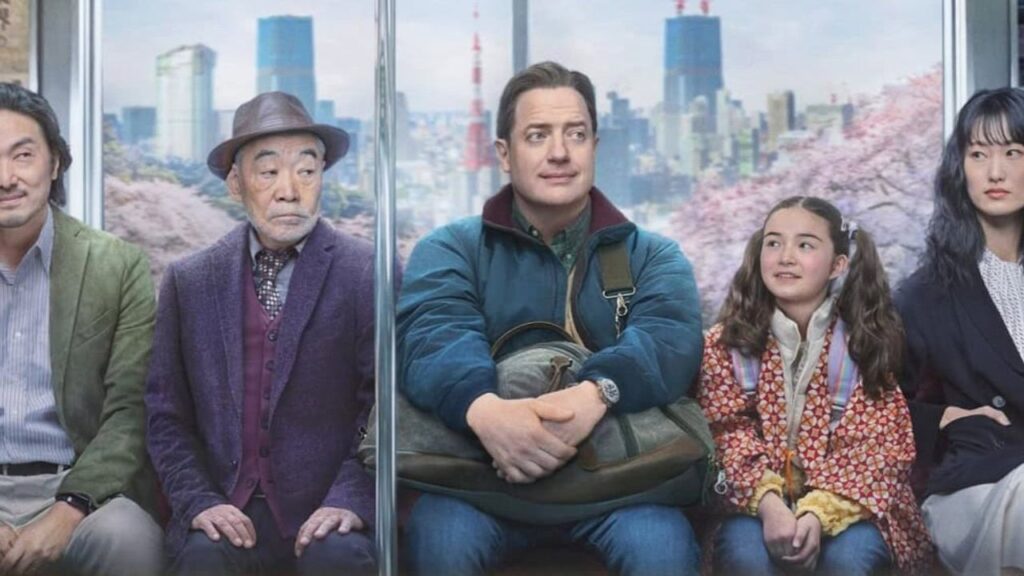
Yuji is trained to play different roles depending on the situation:
- A father for a child whose real dad abandoned the family
- A husband for a lonely woman facing pressure from relatives
- A supportive friend for someone grieving
- A stand-in relative for ceremonial events
Despite performing these roles with precision and kindness, Yuji himself lives a completely isolated life. Off-camera, he eats alone, sleeps alone, and avoids emotional relationships. His world is built on scripted affection, but not genuine connection.
The emotional turning point comes when Yuji meets Miyako, a young woman who hires him to act as her fiancé to satisfy her parents. Unlike other clients, she seems to see through his performance—and begins asking difficult questions about who he really is.
As Yuji becomes entangled in her life and her family’s expectations, he is forced to confront the painful emptiness behind his profession.
View Also: Selena y Los Dinos Movie Review-2025
A Beautiful Exploration of Loneliness in Modern Society
One of the film’s strongest elements is its honest depiction of loneliness. Instead of portraying it dramatically, Rental Family captures quiet, everyday loneliness—the kind that builds over time and becomes a silent burden.
The movie reveals:
- People pretend to be fine because society punishes vulnerability
- Relationships can be transactional without feeling transactional
- Family bonds can be performed but not truly replaced
- Loneliness is not always visible, even in crowded cities
Through different clients, the film shows diverse shades of emotional emptiness:
- elderly parents whose children never visit
- single mothers craving emotional support
- businessmen who have no friends
- teenagers who want a father figure
- widows who can’t move on after losing loved ones
Each scenario is handled thoughtfully, with sensitivity rather than judgement.
Yuji: A Man Who Plays Everyone Except Himself
Yuji is one of the most compelling characters in recent cinema. On the surface, he is calm, polite, and emotionally consistent—everything his clients want. But internally, he is struggling with identity loss.
He spends so much time pretending to be someone else that he no longer remembers who he was before the job. His emotional numbness is not coldness—it is a survival mechanism.
Some of the most powerful scenes include:
- Yuji rehearsing fatherly affection in front of a mirror
- Removing his “wedding ring props” after a job and staring at his empty home
- Smiling warmly at a child while his eyes silently reveal exhaustion
- Eating alone after giving emotional comfort to a client’s family
His character represents a heartbreaking truth:
You can help others heal while remaining deeply broken yourself.
Miyako: The First Person Who Sees Him Clearly
Miyako becomes the emotional centre of the story. She hires Yuji to be her pretend fiancé because she fears disappointing her traditional parents. But unlike other clients, she does not treat the arrangement casually.
She asks:
- “Do you ever get tired of lying?”
- “When the job ends, who are you really?”
- “Do you wish someone would stay with you for real?”
These questions break Yuji’s emotional mask.
Miyako’s character represents:
- vulnerability
- insecurity
- societal pressure
- the longing for love
- the fear of disappointing family
Her interactions with Yuji create a beautiful slow-burn emotional arc, leading to an ending that is bittersweet but profound.
Social Commentary: The Cost of a Performance-Based Society
Rental Family subtly criticizes modern society’s obsession with image and social expectations. In a culture where failure feels shameful and loneliness feels like a personal flaw, people seek temporary solutions instead of emotional healing.
The film highlights how:
- Appearances matter more than emotional truth
- People hire happiness when they cannot create it
- Family is sometimes more about display than love
- Human warmth can be imitated but not replaced
This makes the story universally relatable—not just in Japan, but globally.
Acting and Performances
The lead actor portraying Yuji delivers an outstanding performance. His expressions are minimal but powerful, conveying emotional exhaustion and suppressed pain without dramatic outbursts.
The actress playing Miyako brings warmth and authenticity, creating a perfect contrast to Yuji’s guarded nature.
Supporting cast members—particularly the clients—add emotional depth and realism.
Direction, Cinematography & Tone
The film’s visual style is soft, intimate, and emotional.
- Warm lighting is used during the rental family scenes to represent false comfort
- Cool, muted colours are used in Yuji’s personal life to represent isolation
- Long, quiet shots emphasize stillness and emptiness
- Close-up camera work captures small but powerful emotional details
The director focuses on humanity over spectacle, making the film feel deeply personal.
View Also: Predator: Badlands Review 2025
The Ending: Realistic, Emotional, and Thought-Provoking
Without giving spoilers, the film ends on a note that avoids clichés. Instead of forcing a perfect romantic ending or grand transformation, it leaves the audience reflecting on:
- the importance of real relationships
- the difficulty of breaking emotional habits
- the beauty of small steps toward healing
Yuji’s final decision is neither dramatic nor predictable—it is quietly human.
Why Rental Family Deserves Your Attention
This film stands out because it is:
- emotionally authentic
- socially relevant
- beautifully acted
- deeply touching
- filled with quiet but powerful moments
It makes you think about:
- the people you love
- the people you’ve lost contact with
- the pressure society places on emotional stability
- the masks people wear every day
- the quiet pain behind forced smiles
If you appreciate character-driven dramas, cultural storytelling, and films that reveal hidden emotional truths, Rental Family is a must-watch.